

Improving Risk/Return In Your Portfolio By Upgrading Over SPY, VOO, IWM & SCHD
Six under-the-radar ETFs that challenge the industry's biggest heavyweights.

Most investors default to the usual suspects in their portfolios:
SPDR S&P 500 ETF (SPY)
Invesco QQQ Trust (QQQ)
Vanguard S&P 500 ETF (VOO)
Vanguard Total Bond Market ETF (BND)
iShares Russell 2000 ETF (IWM)
…without ever asking whether those funds are actually the best tools for the job. The truth is that they often aren’t. Index construction quirks, mega-cap concentration, and style drift have created real gaps between what investors think they’re buying and what these products actually deliver.
I want to highlight six smaller, under-followed ETFs that have demonstrated the ability to enhance risk-adjusted returns under the right conditions. Each one offers a structural or strategic advantage over the mainstream alternatives whether that’s through smarter weighting, stronger risk-adjusted returns, cleaner factor exposure, or simply aligning better with the objective investors are targeting.
There’s nothing wrong with choosing VOO, IWM or BND for core exposures in your portfolio. But there are opportunities to improve it using factor tilts and other elements.
Let’s take a look at this week’s six ETFs and why they can represent an improvement for your portfolio.
A Smarter S&P 500 Core Than SPY, VOO
Original: SPDR S&P 500 ETF (SPY), Vanguard S&P 500 ETF (VOO)
Upgrade: Invesco S&P 500 GARP ETF (SPGP)
Category: U.S. Large-Cap Core
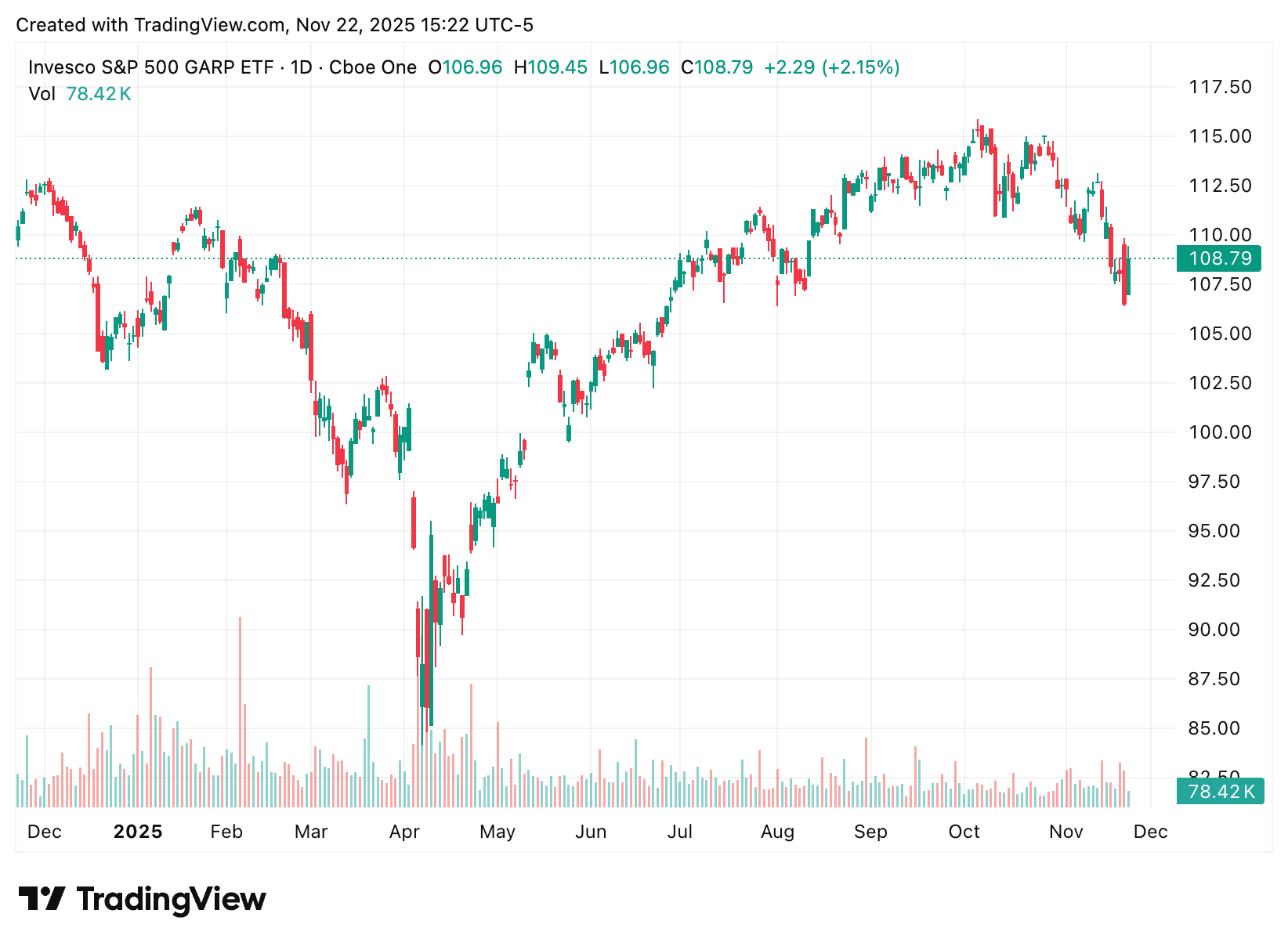
Why It’s Underrated: Most “core” portfolios blindly overweight the biggest mega-caps. SPGP fixes that.
SPGP selects around 75 S&P 500 companies using a GARP (growth-at-a-reasonable-price) screen, which considers earnings growth, quality balance sheets, and reasonable valuations. The result is a curated large-cap portfolio with far more intention and better balance than the traditional cap-weighted indices allow.
Over long time frames, SPGP has consistently outperformed the S&P 500, largely because it avoids overpaying for growth and trims exposure to the most over-owned mega-caps. Think of it as the S&P 500 the way active managers wish it looked.
Best Use: Replace part of your SPY/VOO exposure with a higher-quality, more valuation-aware version of large caps.
True U.S. Value Exposure Done the Right Way
Original: Vanguard Value ETF (VTV), iShares Russell 1000 Value ETF (IWD)
Upgrade: State Street SPDR S&P 1500 Value Tilt ETF (VLU)
Category: All-Cap Value
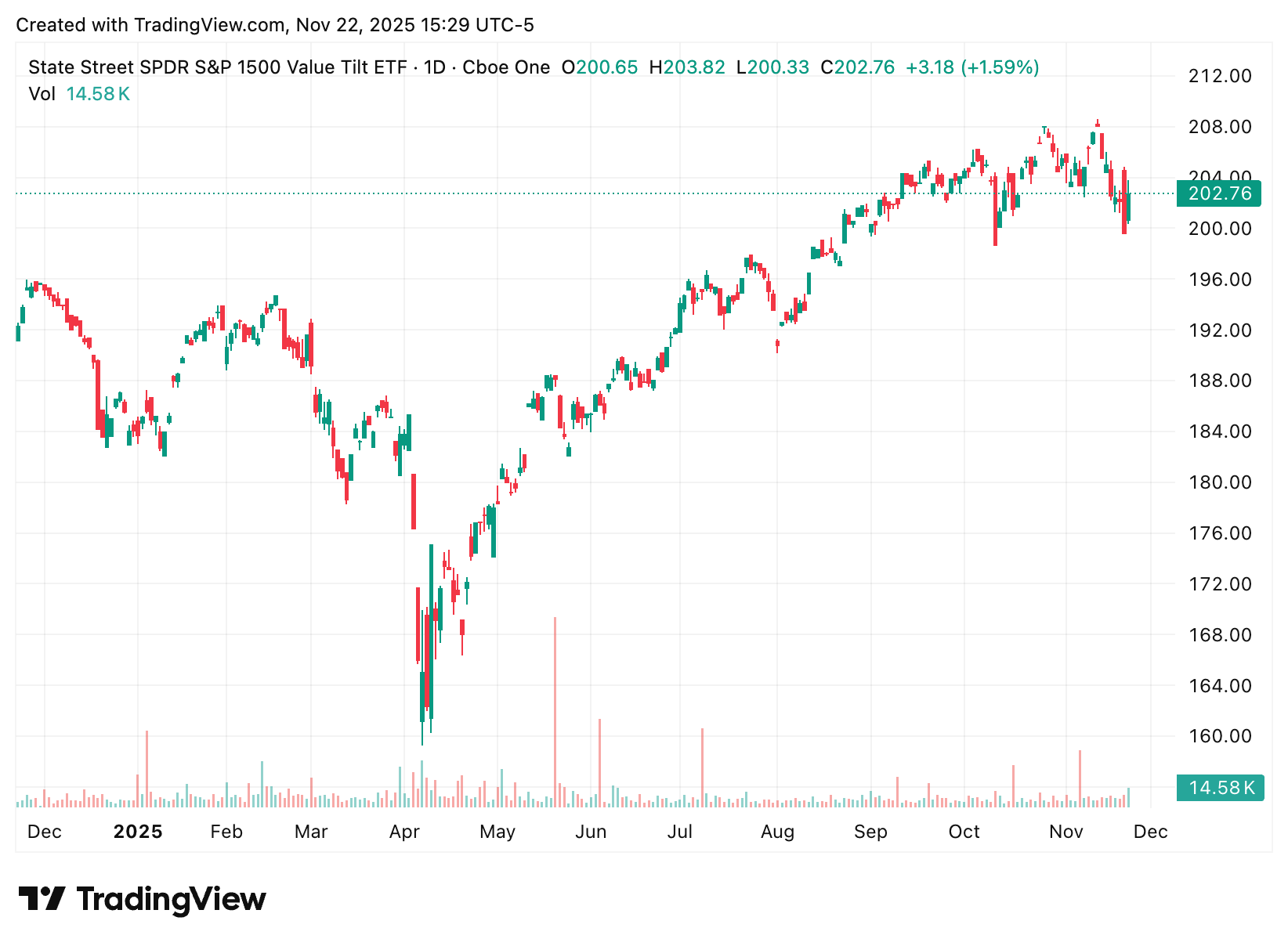
Why It’s Underrated: VLU is one of the few value ETFs that actually tilts toward value.
Where many “value” ETFs rely on sector labels or modest weighting tweaks, VLU directly targets the cheapest stocks in the entire S&P 1500 universe - large, mid, and small. It systematically overweights companies with low price-to-book and price-to-earnings ratios while underweighting expensive names, all at a very low cost.
This is a purer value strategy with a long-term record of stronger valuations and a more holistic reach across the U.S. equity universe. It’s ideal for investors frustrated by value ETFs that don’t feel that “value-heavy” in practice.
Best Use: A cleaner, more comprehensive value sleeve than vanilla funds like VTV or IWD.
Mid-Cap Quality That Leaves IJH Behind
Original: iShares Core S&P Mid-Cap ETF (IJH), Vanguard Mid-Cap ETF (VO)
Upgrade: Invesco S&P MidCap Quality ETF (XMHQ)
Category: U.S. Mid-Cap Quality
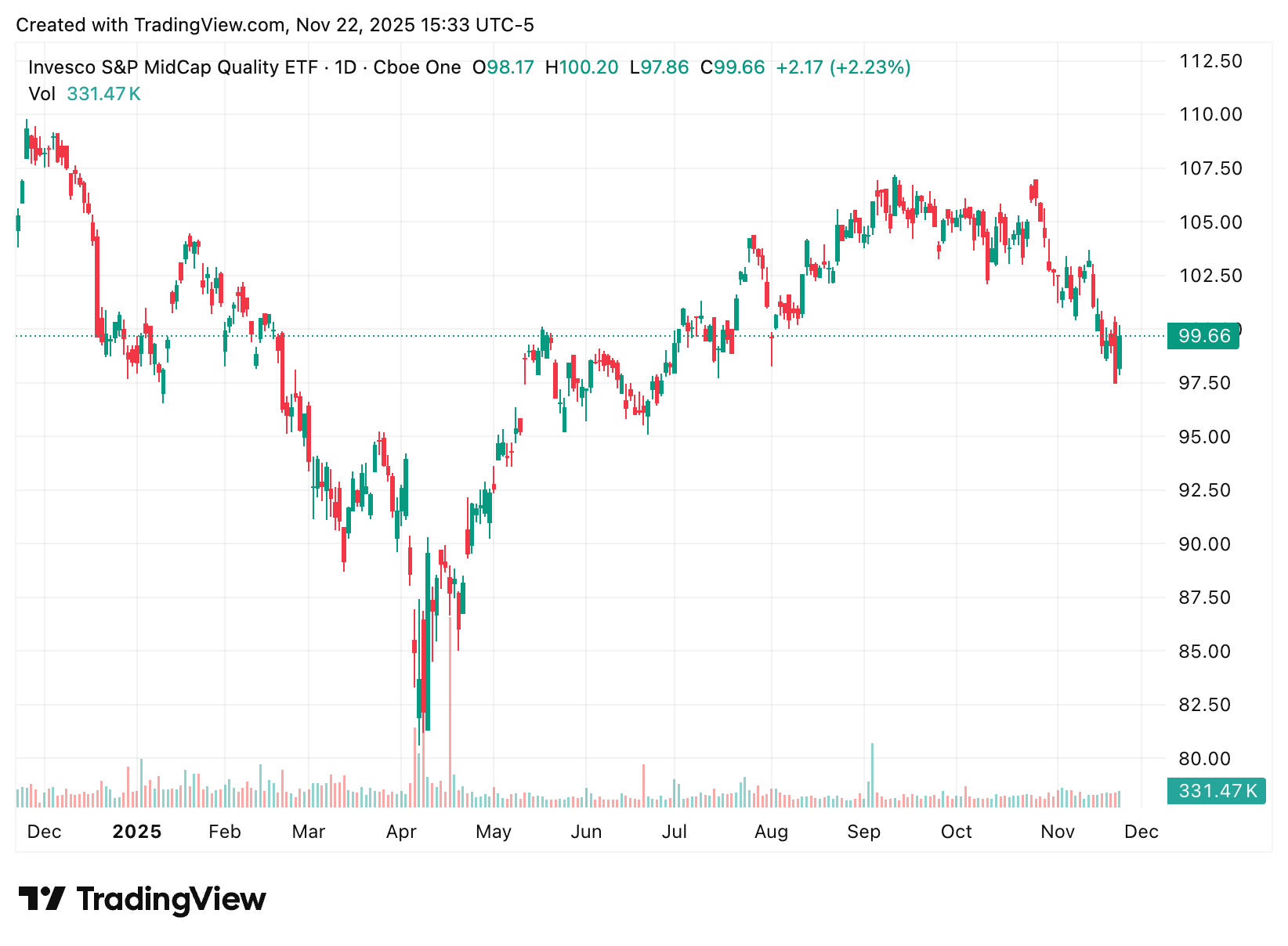
Why It’s Underrated: Mid-caps are often a forgotten sweet spot and this is one of the best ways to own them.
Instead of owning 400 mid-cap names (as IJH does), XMHQ builds a focused list of ~80 companies with superior balance sheets, higher returns on equity, and consistent earnings profiles. That quality tilt has translated into meaningful long-term outperformance versus the standard mid-cap index.
You get exposure to the part of the market with some of the best historical return characteristics, but with a screen that filters out the lower-quality, cyclical, or credit-heavy names that often drag down mid-cap performance.
Best Use: A more durable, more growth-efficient mid-cap sleeve for core portfolios.
The Small-Cap Fund That Fixes IWM’s Biggest Flaws
Original: iShares Russell 2000 ETF (IWM), Vanguard Russell 2000 ETF (VTWO)
Upgrade: Avantis U.S. Small Cap Value ETF (AVUV)
Category: U.S. Small-Cap Value
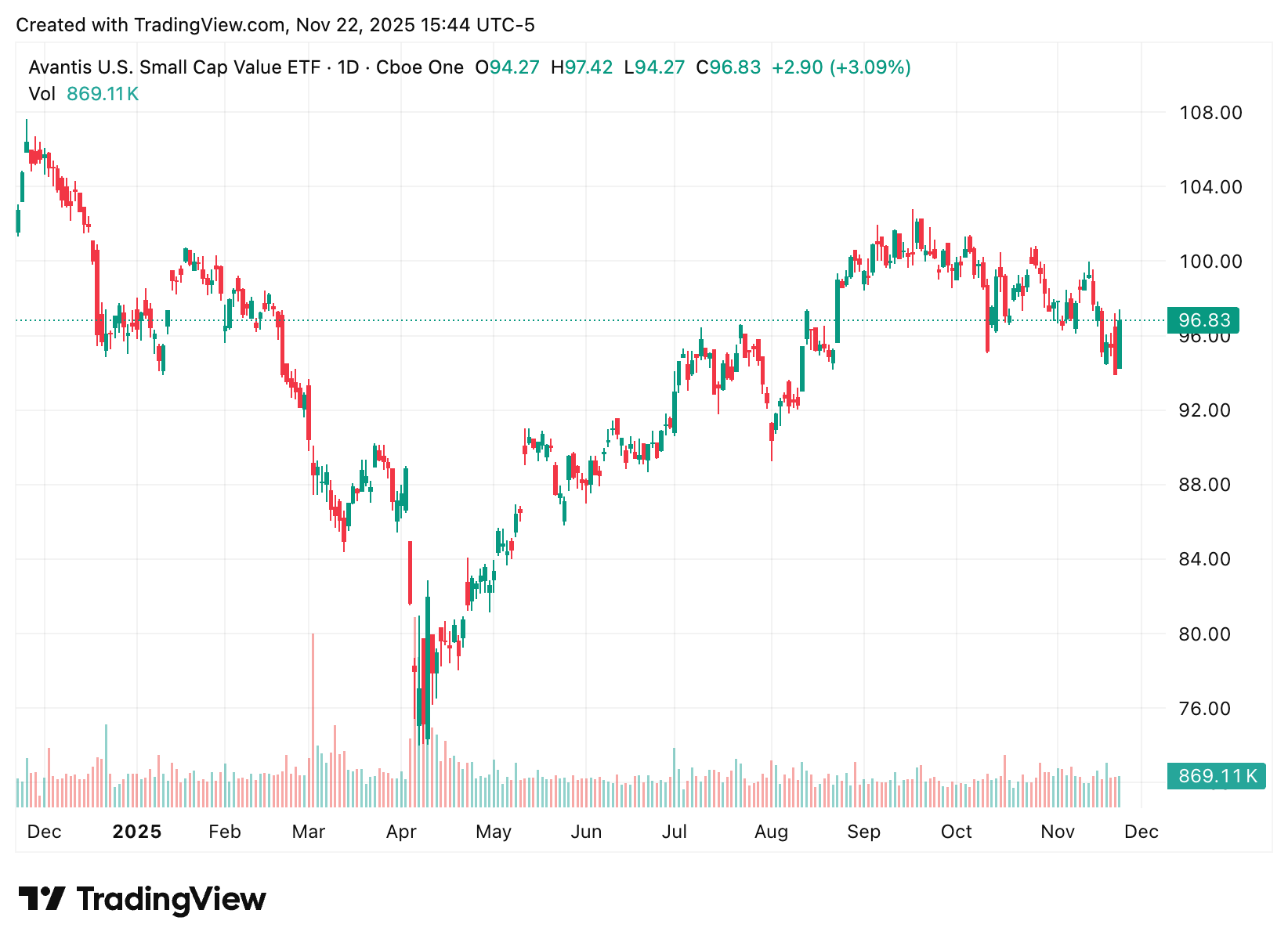
Why It’s Underrated: It’s everything people want small-caps to be but rarely are.
The problem with the Russell 2000 is well-documented. It includes hundreds of unprofitable companies and overly speculative names. AVUV solves that by applying a deep small-cap value and profitability tilt, emphasizing cheaper, smaller, and more financially solid stocks.
Since inception, AVUV has delivered higher returns and lower volatility than IWM, a rare achievement in the small-cap universe. This is arguably one of the most efficient small-cap strategies available today.
Best Use: Replace or complement IWM with a higher-quality, higher-expected-return small-cap sleeve.
Developed International Exposure Without the EAFE Baggage
Original: iShares MSCI EAFE ETF (EFA), Vanguard Total International Stock ETF (VXUS)
Upgrade: FlexShares Morningstar Developed Markets ex-US Factor Tilt Index ETF (TLTD)
Category: International Developed ex-US
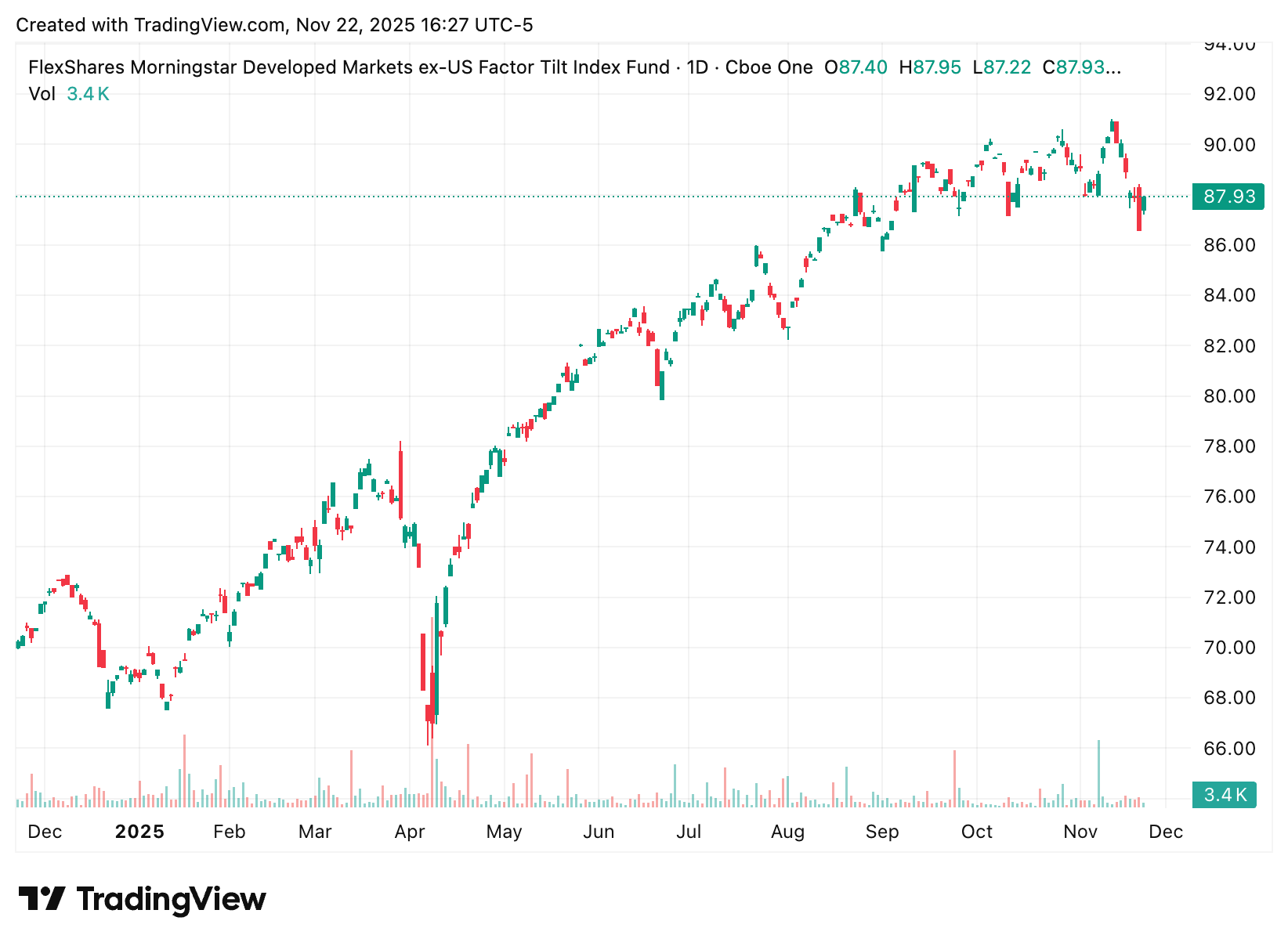
Why It’s Underrated: Because most international funds overweight slow-growth giants and underweight the factors that actually drive returns.
TLTD builds a broad ex-US portfolio but leans intentionally toward smaller and cheaper companies, the opposite of what EAFE does. It’s a factor-tilted, globally diversified portfolio that captures the long-term return potential in international markets far better than traditional ex-US funds.
TLTD has gained traction recently thanks to its combination of factor exposure, diversification, and steadily improving international fundamentals. Yet it still flies under the radar of most U.S. investors.
Best Use: A smarter, higher expected return replacement for generic developed markets exposure.
A Better Way to Capture Dividend Value Than VYM or SCHD
Original: Vanguard High Dividend Yield ETF (VYM), Schwab U.S. Dividend Equity ETF (SCHD)
Upgrade: Cambria Shareholder Yield ETF (SYLD)
Category: U.S. Value / Cash Return Factor
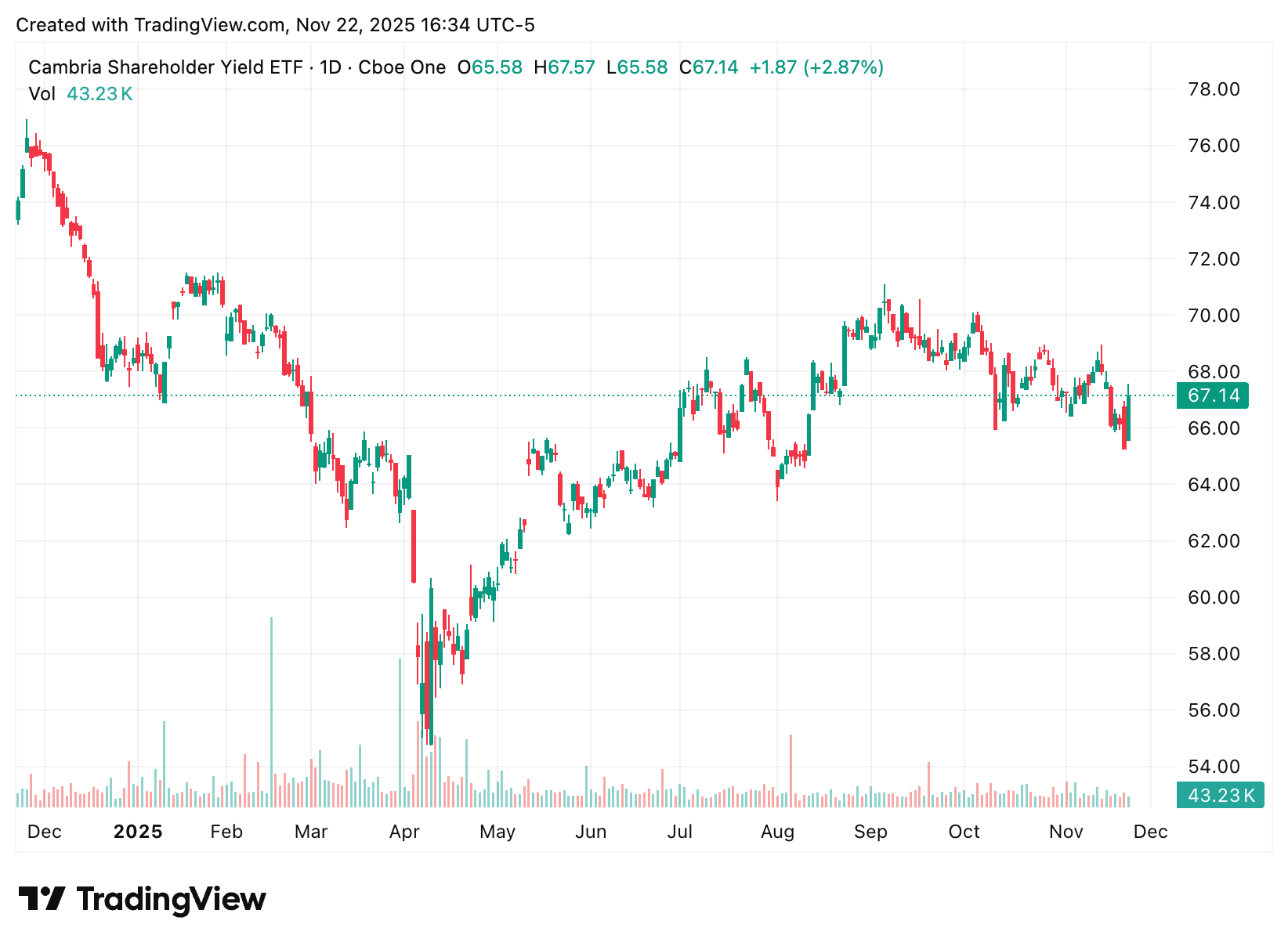
Why It’s Underrated: Because dividends alone don’t tell the whole story and SYLD knows it.
This Cambria ETF screens for shareholder yield, which includes:
Dividends
Net share buybacks
Debt paydown
That creates a fundamentally different portfolio from traditional high dividend funds, which often concentrate in slow growth sectors. SYLD, by contrast, favors companies that are actively returning capital to shareholders across multiple channels.
The result: a more dynamic, more valuation-conscious portfolio with strong risk-adjusted returns and a more flexible approach to income.
Best Use: A modern, cash flow based alternative to dividend ETFs that over-rely on yield.
Final Takeaway
Each ETF here:
Provides a clear structural edge over the conventional benchmark
Offers a more intentional implementation of the intended exposure
Has delivered meaningful performance or risk-adjusted benefits
Remains overlooked by most investors despite strong fundamentals
Man you are coming with the heat day after day! I love it! I'm a boring longterm etf investor with certain sector tilts. My strategy of buying broad and concentrated etfs, along with a tdf in my roth, and simply not checking my account on bad days has really been working out. Gemini ai also really helps me on the behavioral finance side after I've laid out my plan, strategy, and time horizon.
Saving for later to compare the differences between the ETFs and see if I can just directly buy any tickets that are undervalued.