

ETF Upgrades: Improving Risk/Return By Replacing SPY, VOO, QQQ & IWM In Your Portfolio
Six under-the-radar ETFs that challenge the industry's biggest heavyweights.

Most investors default to the usual suspects in their portfolios:
SPDR S&P 500 ETF (SPY)
Invesco QQQ Trust (QQQ)
Vanguard S&P 500 ETF (VOO)
iShares Core S&P Mid-Cap ETF (IJH)
iShares Russell 2000 ETF (IWM)
…without ever asking whether those funds are actually the best options for their needs. The truth is that they often aren’t. Index construction quirks, mega-cap concentration, and style drift can create real gaps between what investors think they’re buying and what these products actually deliver.
I want to highlight six smaller, under-followed ETFs that have demonstrated the ability to enhance risk-adjusted returns under the right conditions. Each one offers a structural or strategic advantage over the mainstream alternatives whether that’s through smarter weighting, stronger risk-adjusted returns, better factor exposure, or simply aligning better with the objective investors are targeting.
There’s nothing wrong with choosing VOO, QQQ, or IWM for core exposures in your portfolio. But there are opportunities to improve it using factor tilts and other elements.
Let’s take a look at this week’s six ETFs and why they can represent an improvement for your portfolio.

A Growth-at-a-Reasonable-Price Filter on the S&P 500
Original: Vanguard S&P 500 ETF (VOO)
Upgrade: Invesco S&P 500 GARP ETF (SPGP)
Category: U.S. Large-Cap Core
Why It’s Underrated: Most “core” portfolios market cap-weight their portfolios and end up overweighting the biggest mega-caps. SPGP adds a filter.
SPGP selects around 75 S&P 500 companies using a GARP (growth-at-a-reasonable-price) screen that considers 3-year earnings and sales growth, return on equity, financial leverage, and earnings-to-price (E/P) ratios. The result is a large-cap portfolio with a bigger quality tilt than the traditional cap-weighted indices. It also reduces the concentration in the market’s heavily-invested names.
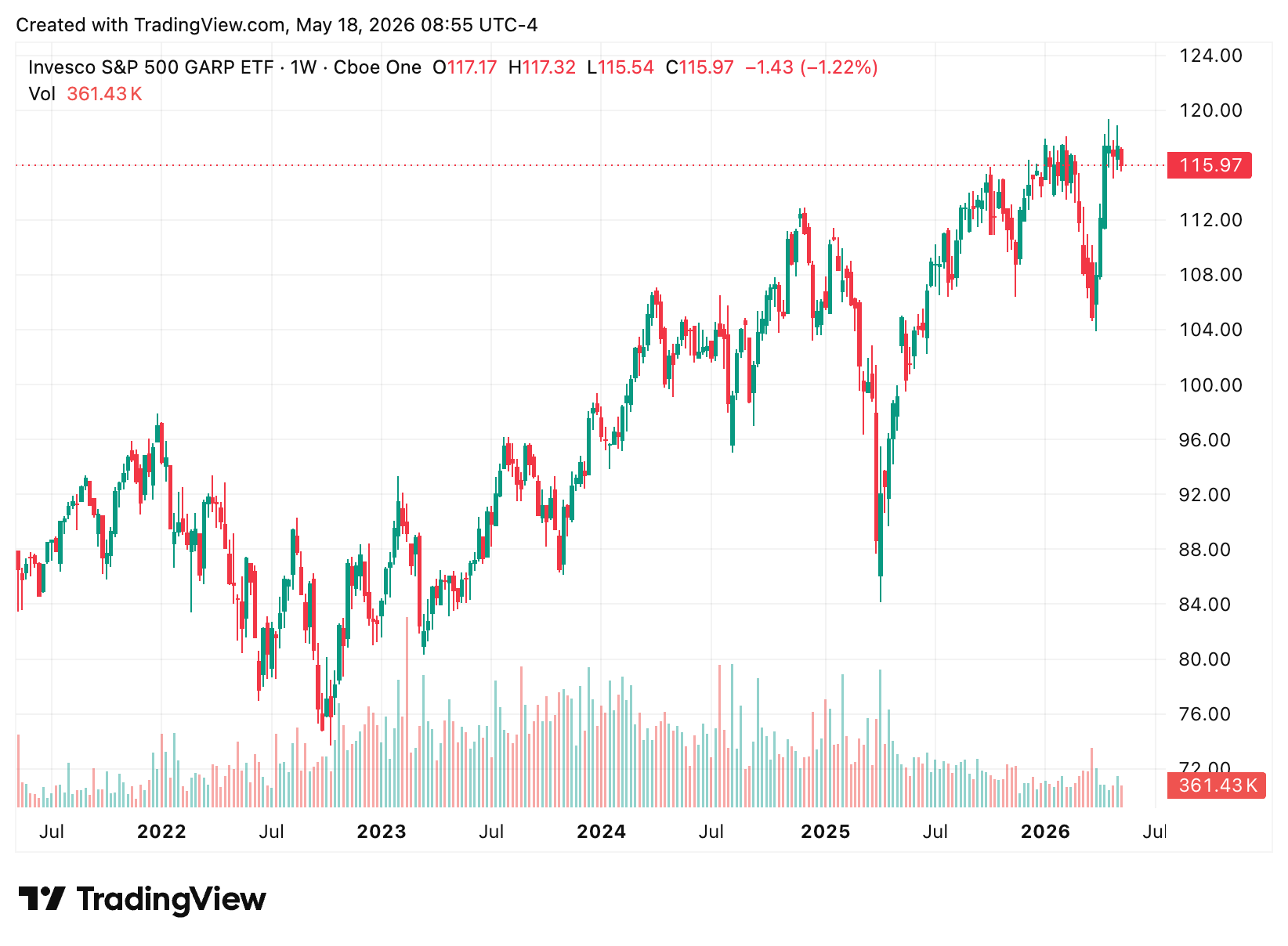
With S&P 500 earnings growth expected to stay strong over the next 12 months, a fund that captures that growth while screening out the most expensive and/or financially unhealthy companies is a cleaner way to play the theme. The five-year average annual return is roughly 12.3%.
Best Use: Replace part of your VOO exposure with a higher-quality, more valuation-aware version of large-cap growth.
A Fundamentally Built Core That Reduces Mega-Cap Overload
Original: Vanguard S&P 500 ETF (VOO)
Upgrade: Schwab Fundamental U.S. Large Company ETF (FNDX)
Category: U.S. Large-Cap Core
Why It’s Underrated: FNDX selects AND weights companies based on fundamental measures of health, not how the market prices them.
Instead of letting the largest stocks dominate simply because their prices went up, FNDX rebalances annually using sales, retained operating cash flow, and dividends plus buybacks. That leads to a portfolio of roughly 730 companies that more closely approximate which companies are generating revenues and cash. It leans naturally toward cheaper stocks and trims the expensive ones automatically.
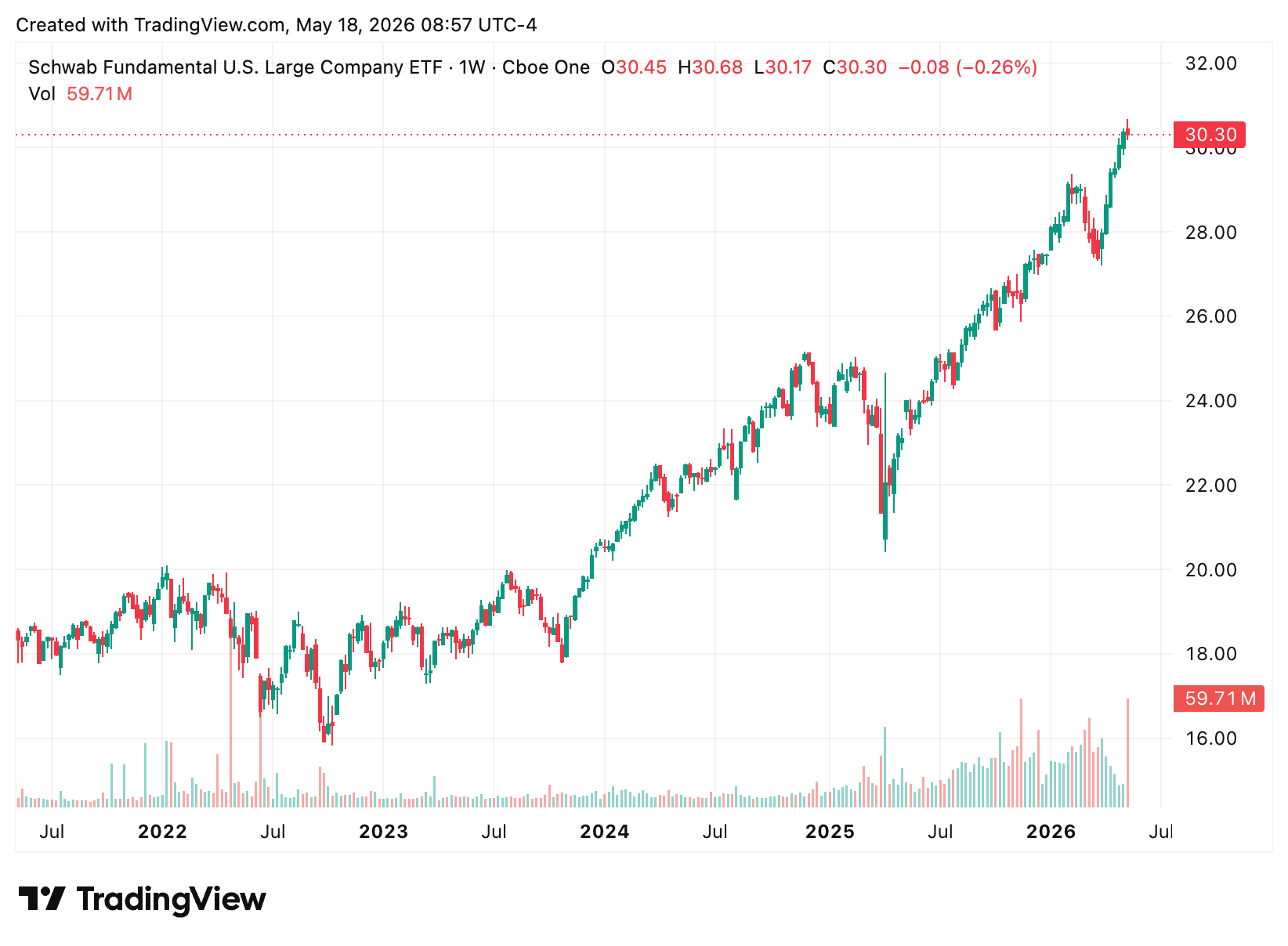
The top 10 S&P 500 names now represent roughly 40% of the index’s weight. FNDX’s top represent only half of that, reducing concentration risk. Over the trailing 12 months, it returned more than 28%, outpacing the S&P 500, while carrying a lower standard deviation over three years.
Best Use: A more balanced, fundamentals-first alternative to traditional cap-weighted large-cap indexes.
A More Dynamic Large-Cap Core
Original: iShares Russell 1000 ETF (IWB)
Upgrade: Invesco Russell 1000 Dynamic Multifactor ETF (OMFL)
Category: U.S. Large-Cap Core
Why It’s Underrated: OMFL keeps your core exposure intact but improves how you own the market.
Instead of relying on pure market-cap weighting, OMFL rotates between value, quality, momentum, and low-volatility factors based on where the economy currently sits in the cycle. It’s still the Russell 1000 universe, but with a dynamic, rules-based overlay that tilts the portfolio toward the factors that historically work best in multiple economic regimes.
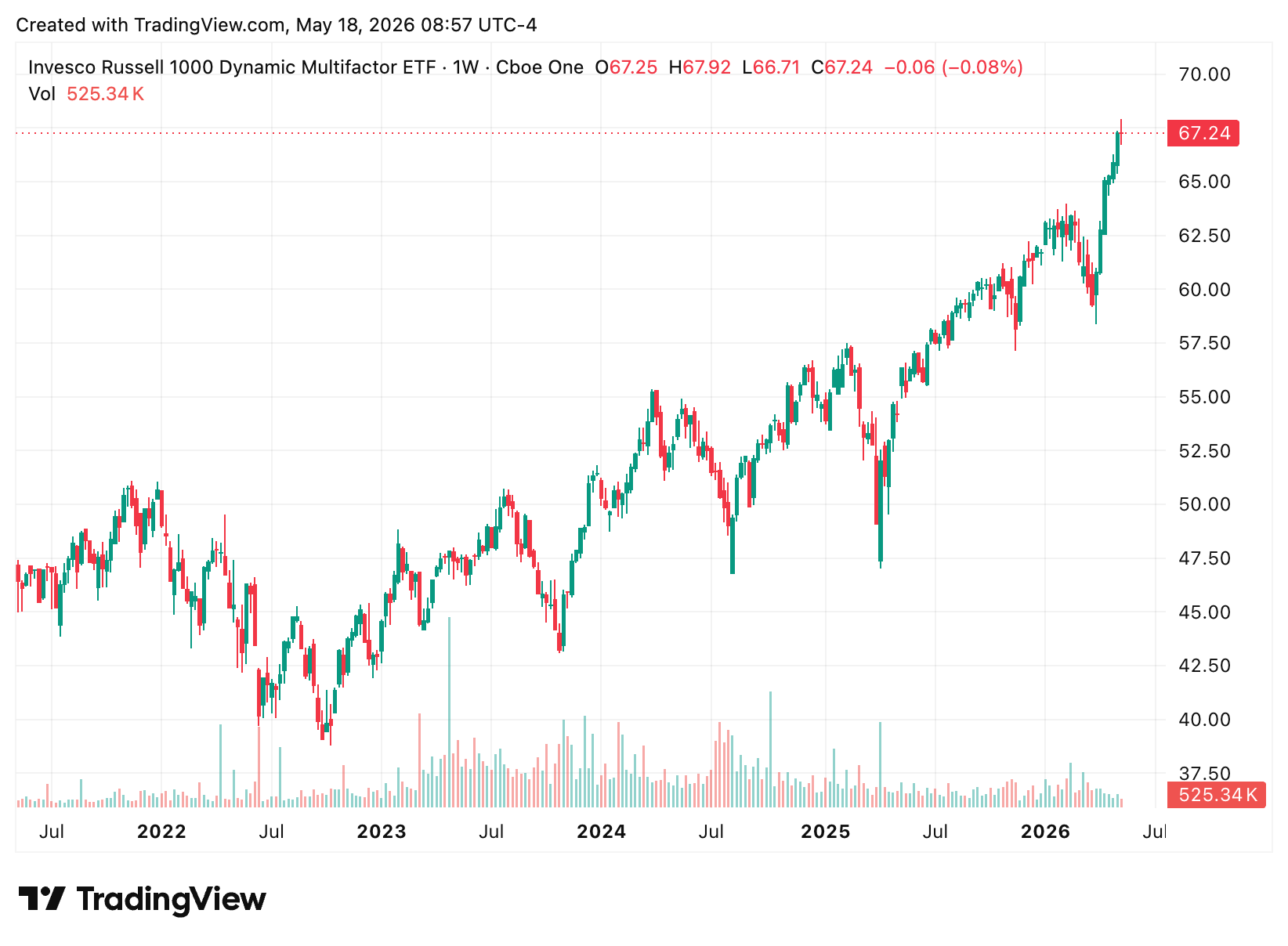
The result is broad U.S. equity exposure with intentional shifts away from the usual mega-cap concentration and toward areas of the market that are supported by current conditions. With the Fed on hold and inflation reaccelerating, the quality and momentum tilts OMFL emphasizes in a late-cycle environment have the potential to really outperform.
Best Use: Upgrade part of your traditional S&P 500 allocation with a smarter, cycle-aware approach to large-cap indexing.
Targeting the Quality Names in the Mid-Cap Universe
Original: iShares Core S&P Mid-Cap ETF (IJH)
Upgrade: Invesco S&P MidCap Quality ETF (XMHQ)
Category: U.S. Mid-Cap Core
Why It’s Underrated: Mid-caps are often a forgotten sweet spot for equities and this is one of the best ways to own them.
Instead of owning all 400 mid-cap names in IJH, XMHQ builds a focused list of roughly 80 companies with superior balance sheets, higher returns on equity, and consistent earnings. That quality tilt has translated into meaningful long-term outperformance: a 5-year and 10-year annualized returns both beat IJH by 1% annually.
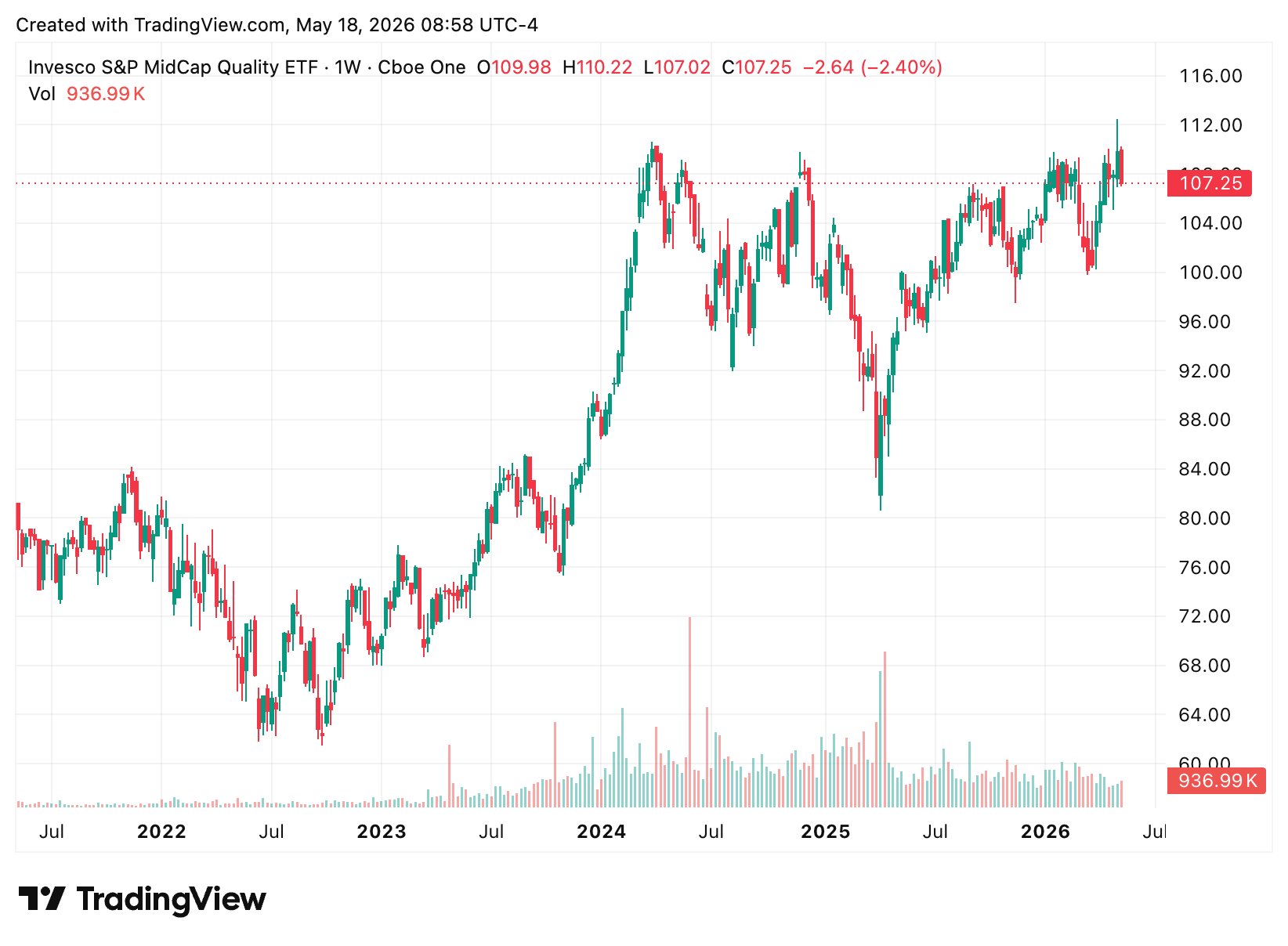
You get exposure to the part of the market with some of the best historical return characteristics, but with a screen that filters out the lower-quality, cyclical, or credit-heavy names that often drag down mid-cap performance. As small- and mid-cap earnings are expected to accelerate in the second half of 2026, owning the best balance sheets in this segment matters more than owning all of them.
Best Use: A more durable, more quality-oriented mid-cap sleeve for core portfolios.
The Small-Cap ETF That Fixes IWM’s Biggest Flaws
Original: iShares Russell 2000 ETF (IWM), Vanguard Russell 2000 ETF (VTWO)
Upgrade: Avantis U.S. Small Cap Value ETF (AVUV)
Category: U.S. Small-Cap Value
Why It’s Underrated: Around 40% of the Russell 2000’s components are unprofitable. That makes small-caps very vulnerable if conditions worsen.
AVUV helps solve that by applying a deep small-cap value and profitability tilt that emphasizes cheaper, smaller, and more financially solid stocks. The profitability screen is the key differentiator. Generic small-cap value indexes capture cheap stocks, but many are cheap because their businesses are deteriorating. AVUV requires both cheapness and earnings strength at the same time.
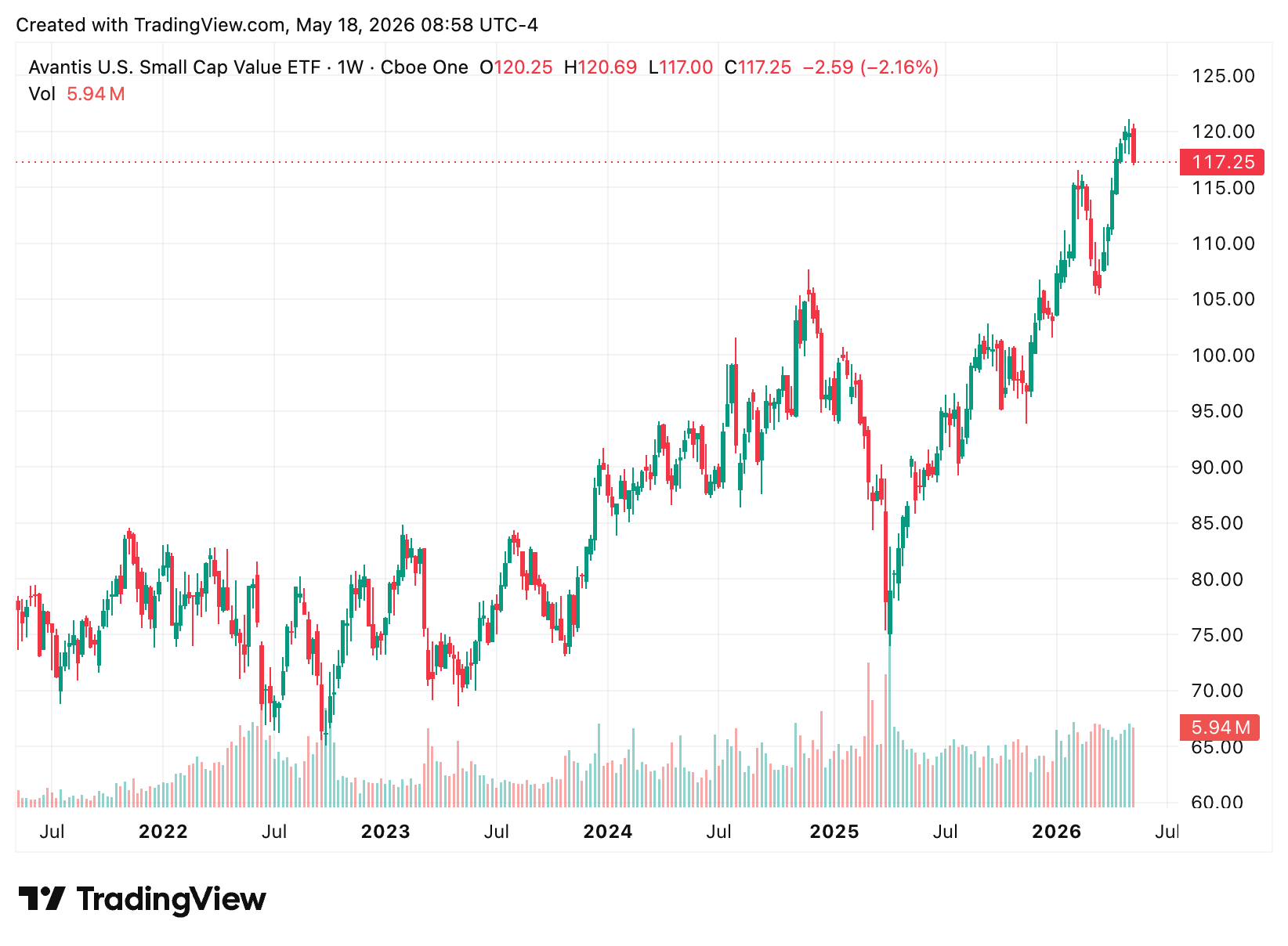
The numbers back it up: a 5-year total return of 65% versus 33% for IWM. The expense ratio is just 0.25%, about 47% below the small value category average and attractive for an actively-managed fund. With the value/growth spread at historically wide levels and a small-cap earnings acceleration narrative building for the second half of 2026, AVUV sits in just the right place.
Best Use: Replace or complement IWM with a higher-quality, higher-expected-return small-cap allocation.
Replace Current Nasdaq 100 Leaders With the Next-Gen Ones
Original: Invesco QQQ Trust (QQQ), Invesco NASDAQ QQQ ETF (QQQM)
Upgrade: Invesco NASDAQ Next Gen 100 ETF (QQQJ)
Category: U.S. Growth / Technology
Why It’s Underrated: QQQ owns the 100 largest non-financial Nasdaq stocks. QQQJ owns the next 100.
These are companies already large enough to be taken seriously and often on the path toward Nasdaq-100 inclusion but not quite there yet. QQQJ’s top 10 holdings account for just 21% of assets versus QQQ’s significantly higher concentration. Tech represents roughly 32% of the fund and healthcare comes in above 20%, adding real sector diversification that QQQ doesn’t provide.
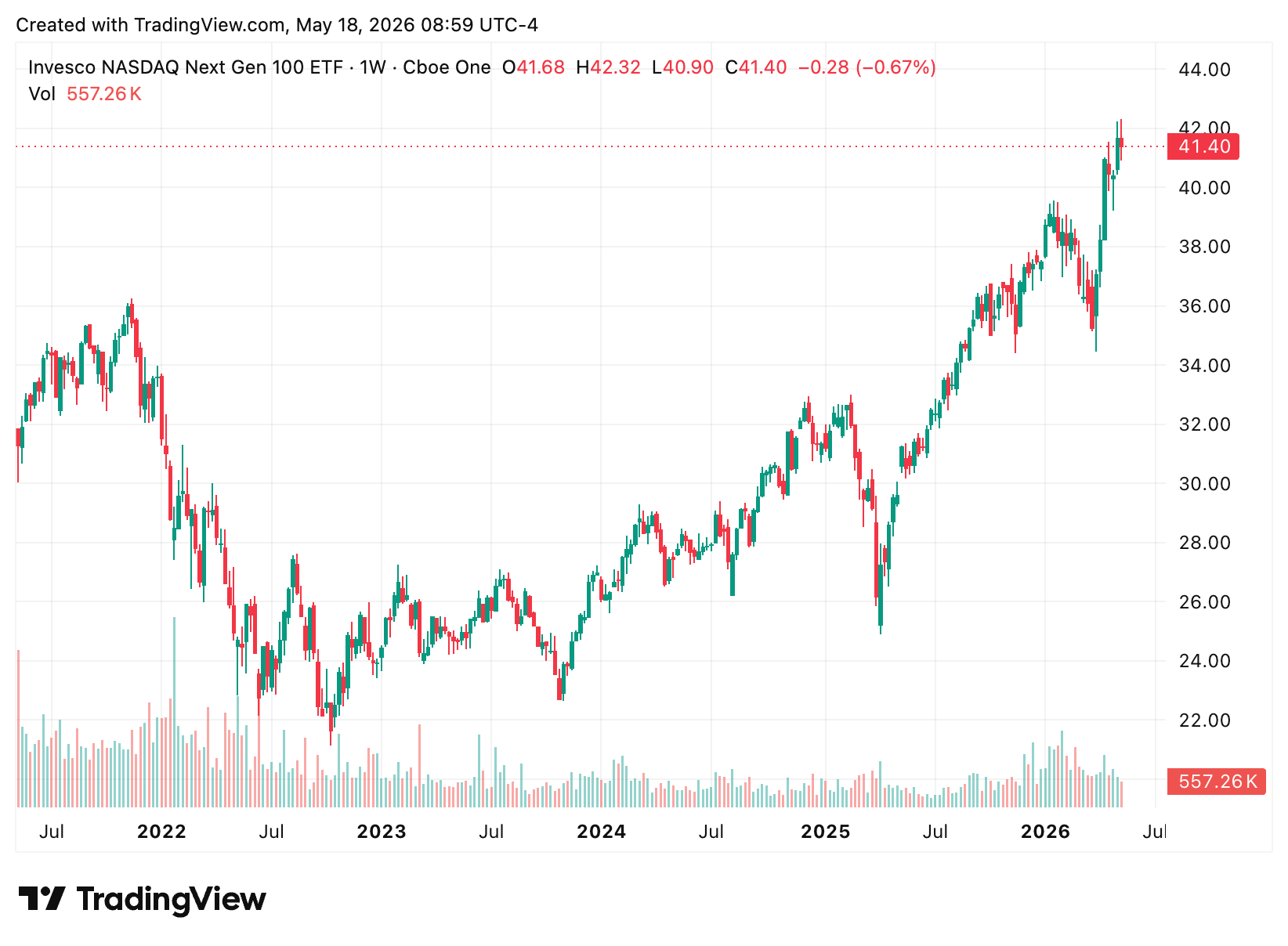
With tech expected to outperform over the next 12 months, QQQJ still captures that theme while offering more room for earnings-driven growth among companies that haven’t yet been fully valued as those already in the Nasdaq 100. Promotion into the index itself creates another built-in upside catalyst.
Best Use: A more balanced way to access Nasdaq tech exposure without betting heavily on a dozen names that already dominate every major index.
Thanks for sharing these ETFs that move beyond basic market weighting. Few people look into the nuances of alternative index construction techniques, and there are a ton of better options available relative to any major benchmark.